Walking changes in older dogs may reveal early dementia
Older dogs take shorter front-leg steps as their minds decline, a change linked more to cognition than age.
Earth.com
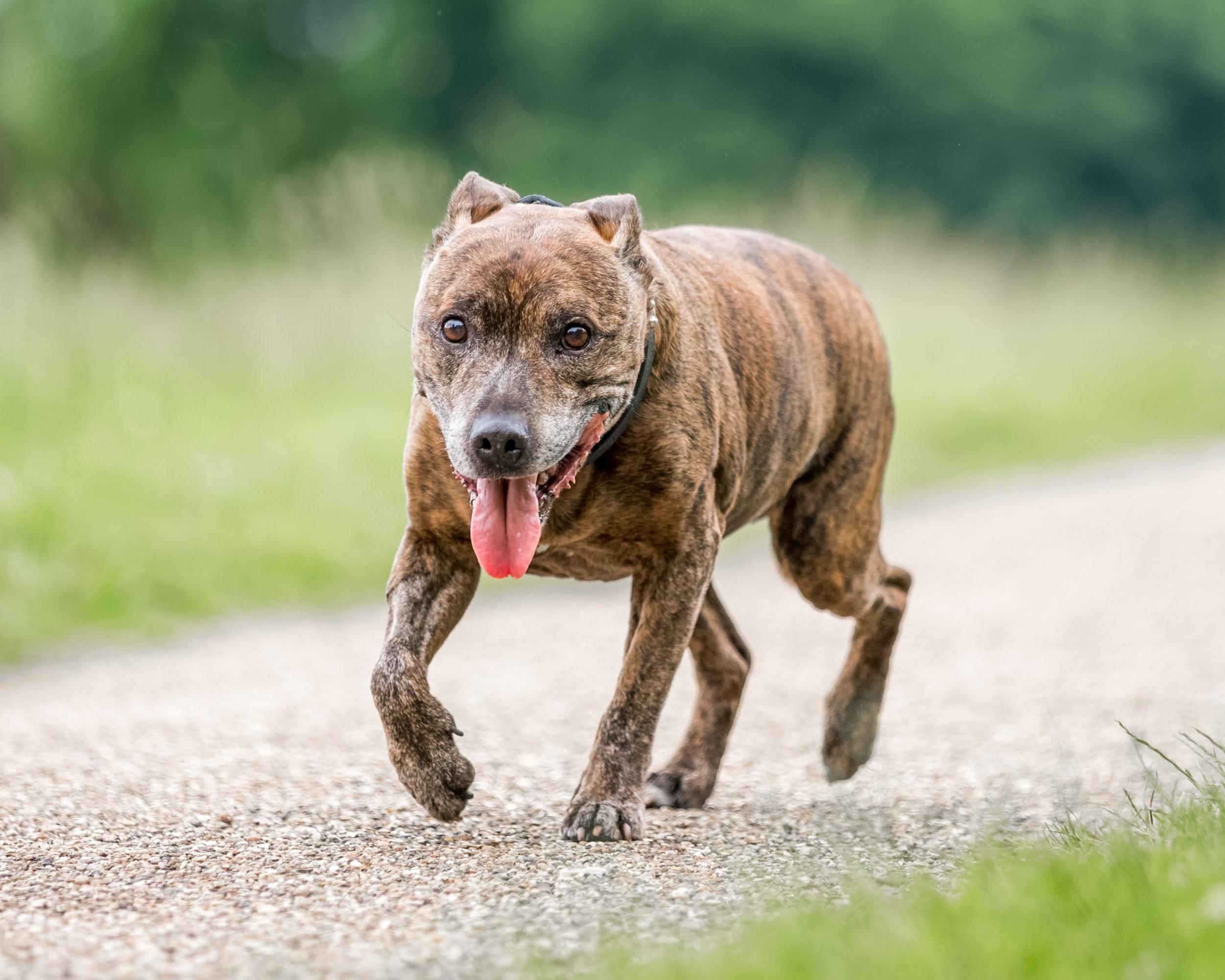
Most of us know our dog’s walk without thinking about it. We notice the trot to the door and the pace on a favorite trail.
A change in that walk is easy to overlook. New work on aging dogs suggests one small shift deserves a closer look.
The length of a dog’s front leg step gets shorter as the mind declines. The pull of cognition turns out to be stronger than the pull of age alone.
A team at North Carolina State University followed 88 senior and older dogs to track how their movement shifts over time.
They measured the length of each step and matched it against owners’ reports of memory and behavior changes.
The front legs told a clear story. As dogs scored worse on a dementia scale, their front leg strides grew shorter.
The back legs did not follow the same pattern. Their step length held fairly steady whatever the cognitive change.
Study lead author Dr. Natasha Olby is a professor of veterinary neurology and neurosurgery at North Carolina State University.
“Here we show that the length of front leg stride taken by dogs decreases with age, but even more importantly, decreases with a cognitive impairment,” said Dr. Olby.
“In fact, we found that the effect of cognitive decline is larger than the effect of age by itself.”
Each dog walked a five-meter hallway at its own pace, held on a loose leash with no treats or coaxing. A camera filmed the pass from the side.
Trained observers counted every step for each leg. Stride length came from dividing the walkway by the step count, then adjusting for the dog’s height at the shoulder.
That height adjustment matters. It strips out the obvious fact that a Great Dane covers more ground per step than a Chihuahua.
Two observers scored the footage, and their numbers agreed closely. The method proved easy to repeat.
Older dogs do take shorter steps. But when age and cognition were weighed together, age on its own lost its force.
The dementia scores stayed tied to stride length even after age was accounted for. A dog’s mental state, not just its years, shaped how far the front legs reached.
The size of the effect was modest. A 10-point rise on the dementia scale matched a drop of about 1.2 percent in front leg stride.
Earlier work had already tied slower walking to cognitive decline in older dogs. This study asked whether stride length adds anything beyond raw speed.
When step length and walking speed were tested together against cognitive scores, stride length stayed meaningful while speed faded.
The reach of a step seems to carry its own message. Pace alone misses part of the picture.
The split between front and back makes biomechanical sense. The two sets of legs do different jobs as a dog moves.
“It is fascinating to see that cognitive decline affects front legs and hind legs differently. In dogs, the hind legs are important for moving forwards, while the front legs also change direction and initiate braking,” said Olby.
“The cerebral cortex integrates more sensory information into the neuronal circuits which produce steps in the front legs, and so loss of high-level sensorimotor integration affects them differently.”
Hind leg movement leans more on rhythmic patterns and joint health. Front leg movement depends on the brain pulling many signals together, which is exactly what fades with cognitive decline.
Sore joints also played a part. Dogs with higher pain scores took shorter front leg strides too.
But pain did not explain away the cognitive link. The tie between dementia scores and stride length held even after pain was factored in.
That points to more than one cause. Both a fading mind and aching joints can pull a dog’s steps shorter.
The pattern lines up with what shows in people. Long before memory clearly slips, some patients begin to walk slower with shorter, uneven steps.
Those changes trace back to brain regions that plan and monitor movement. Dogs, it seems, share a version of the same story.
For owners, the practical part is simple. A shrinking front leg step is a reason to book a visit.
“If owners notice that their dog’s front leg stride is becoming shorter they should visit their vet, for there are possible alternative causes such as arthritic pain or neck issues that can be treated,” noted Olby.
“If a diagnosis of cognitive decline is made, there are likewise several lifestyle interventions that can be made, even if there is currently no cure.”
The study has some limitations. Cognition and pain were judged through owner questionnaires, not formal diagnoses.
The design also cannot prove cause and effect. Shorter steps travel alongside cognitive decline, yet one was not shown to drive the other.
Only dogs able to walk the course took part. The most severely affected animals were likely left out.
Still, the appeal is in the simplicity. The measure needs only a short walk, a camera, and a careful count of steps.
Tracked over time and read beside familiar checkups, it could flag a dog slipping before the changes turn obvious. That early signal is the real value.
The study is published in the journal Frontiers in Veterinary Science.
Like what you read? Subscribe to our newsletter for engaging articles, exclusive content, and the latest updates.
Check us out on EarthSnap, a free app brought to you by Eric Ralls and Earth.com.
Saturday, June 27, 2026