Trump says US 'getting along well' with Iran as both countries hold indirect talks in Qatar
A diplomat confirms that negotiations are underway, with the Iranian delegation led by Deputy Foreign Minister Kazem Gharibabadi.
Dawn
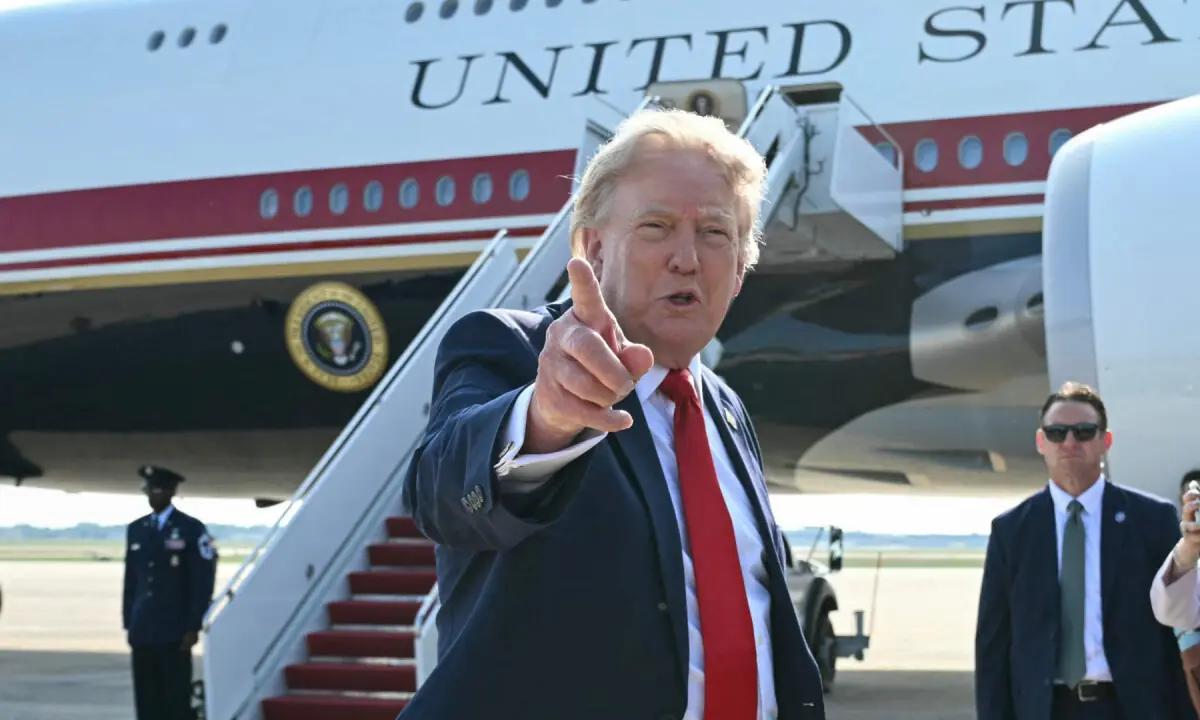
President Donald Trump said on Monday that the United States is “getting along well” with Iran, as the two countries began indirect talks via mediators in Doha on Wednesday, in a bid to advance negotiations and ease tensions following exchanges of fire between the two sides.
“The denuclearisation of Iran is moving along well,” Trump told reporters before leaving for a trip. “They’ve had very good meetings, and we’ll see.”
He added that Tehran had “come a long way” in negotiations with Washington.
“We hit them very hard last week. I think they’re fine,” he said. “It’s the denuclearisation of Iran, it’s very simple, and Iran can never have a nuclear weapon.”
Both the US and Iran said they would send officials to discuss the Islamabad Memorandum of Understanding (MoU) aimed at ending the Middle East war, but Iran insisted direct negotiations would not take place.
A diplomat, speaking on condition of anonymity to discuss the sensitive talks, confirmed negotiations were underway, after earlier saying the foes would take part in “indirect technical talks on Wednesday in Doha with Qatari and Pakistani mediators”.
The discussions, being held at a lower level and focused on the details of the MoU, will “build on the progress made at the Lake Lucerne Summit”, the diplomat told AFP.
However, Iran’s Deputy Foreign Minister Kazem Gharibabadi said that the negotiations for a final deal with Washington have yet to begin, Iran’s Fars news agency reported.
“Follow-up working groups for implementing the understanding and negotiating the final agreement have been formed, but no negotiations have yet begun in these formats,” Gharibabadi said.
US envoys Jared Kushner and Steve Witkoff were not taking part in the technical talks, the diplomat told AFP, after they met with Qatar’s Prime Minister Sheikh Mohammed bin Abdulrahman Al Thani on Tuesday.
In a statement, Qatar’s foreign ministry said the trio discussed “the ongoing talks between the United States of America and the Islamic Republic of Iran within the framework of the memorandum of understanding”, as well as developments in Lebanon.
The Islamabad MoU, brokered by Qatar and Pakistan, culminated in a summit last month in Lucerne, Switzerland, where the US and Iran held direct high-level talks.
It includes a 60-day ceasefire pausing the war that broke out with US-Israeli strikes in late February, as well as the reopening of the blockaded Strait of Hormuz and a timeframe for a final deal to permanently end the conflict and reach an agreement on Iran’s nuclear programme.
A day ago, Tehran denied a claim by Trump that there would be direct talks in Doha.
Iranian foreign ministry spokesman Esmaeil Baqaei said the delegation led by Gharibabadi had “no plans for negotiations with the American side at any level over the coming days”.
Anna Jacobs, non-resident fellow at the Arab Gulf States Institute, told AFP it was “very early in the negotiation process and battles are being fought privately and publicly”.
“The overall positive message is that they are continuing to engage after the clashes last week,” she said.
H.A. Hellyer, an analyst at the Royal United Services Institute in London, said there was a “lack of transparency” surrounding the talks with both sides “sending very different public messages”.
Since the signing of the US-Iran deal on June 18, both sides have exchanged fire in the Gulf, with Tehran targeting a commercial ship it said had deviated from its approved route through the Strait of Hormuz.
US Central Command responded by saying it had attacked 10 Iranian military targets over the weekend.
Iran then hit back with strikes against US bases in Kuwait and Bahrain, which both condemned Tehran for the attacks.
Iran’s chief negotiator Mohammad Bagher Ghalibaf said on Tuesday in a televised interview that “when a war of this magnitude comes to an end… it is inevitable that there will be implementation challenges, incidents, and differences of opinion, especially where parties such as the Israeli regime are concerned”.
He said the Iranian delegation in Doha would be focused on the implementation of clauses in the deal related to the Strait of Hormuz and fighting in Lebanon.
“Naturally, the Islamic Republic is committed to ensuring that the agreement is implemented, and the enemy, the United States and its ally, must also fulfil their commitments,” he said.
The exchanges of fire appear to have calmed in the days leading up to the talks in Qatar.
On the Lebanon front, fighting between Israel and Hezbollah has been relatively quiet.
Tehran has insisted any deal should include an end to the parallel conflict in Lebanon and a withdrawal of Israeli troops from its south, part of which they have occupied.
Ghalibaf also said Iran’s oil exports had surged since the end of the US blockade on its ports, which Washington imposed in retaliation for Iran blocking shipping through Hormuz.
“From the day the blockade was lifted until today, we have exported more than 40 million barrels of oil,” he told state television.
“By contrast, during the previous 50 to nearly 60 days, we were genuinely unable to export even a single barrel of oil.”
Wednesday, July 1, 2026