Ancient Mars Hosted Complex Deep-Earth Volcanism
Did ancient Mars have a vast underground volcanic system like Earth? This is what a recent study published in Nature Astronomy hopes to address as a team o | Space
Labroots
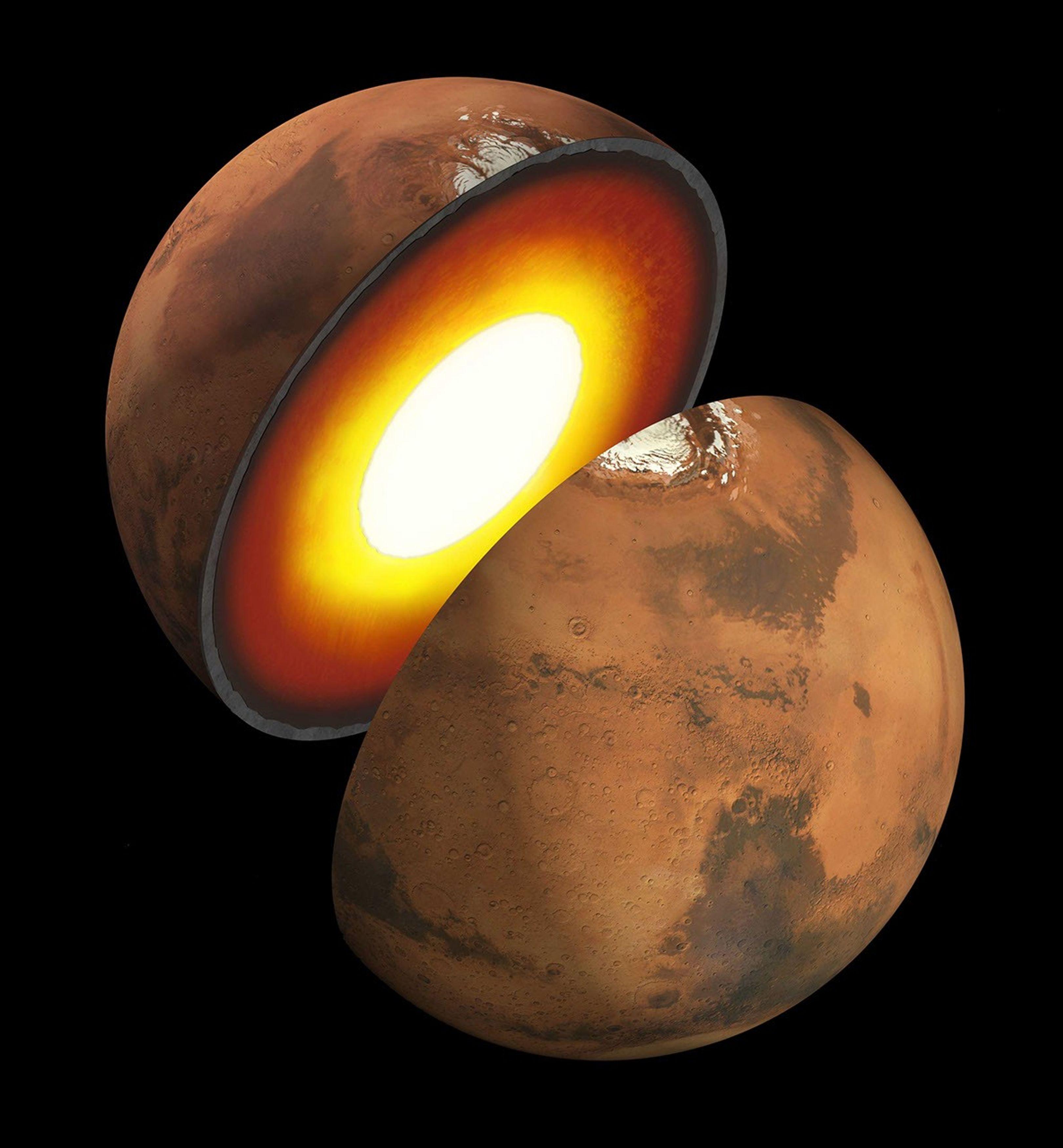
Did ancient Mars have a vast underground volcanic system like Earth? This is what a recent study published in Nature Astronomy hopes to address as a team of scientists investigated whether ancient Mars exhibited similar volcanic and interior geologic activity like Earth long ago. This study has the potential to help scientists better understand the conditions on ancient Mars and whether it could have supported life as we know it.
For the study, the researchers analyzed seismic data from NASA’s InSight lander to examine a geologic boundary between 15 to 23 miles (24 to 38 kilometers) beneath the Martian surface. InSight ceased operations in December 2022 from its solar panels becoming covered in Martian dust, preventing them from using solar energy to charge its batteries. However, researchers continue to comb over data it sent back to learn more about Mars’ interior. The goal of the study was to fill a longstanding knowledge gap regarding how and why this boundary exists.
In the end, the researchers found that this boundary serves as a separator of two different types of rocks within Mars that formed long ago when Mars was more volcanically active. It also demonstrates that longstanding hypotheses about volcanism on Mars and Earth being vastly different were wrong.
“We’ve traditionally assumed that volcanism on Mars was relatively simple compared to that on Earth,” said Dr. Tobermory Mackay-Champion, who is a Senior Research Associate at the University of Bristol and lead author of the study. “But this discovery suggests Mars could sustain large, long-lived systems where molten rock evolved and reprocessed itself throughout the entire crust. It raises exciting possibilities for how common such systems might be on rocky planets beyond our solar system.”
Billions of years ago, Mars was a warmer and wetter place with active volcanism that replenished its atmosphere and flowing rivers and seas of liquid water. However, as Mars’ interior cooled, its volcanism ceased, resulting in the atmosphere becoming thinner and the magnetic field shutting down from the interior activity ceasing. Now, Mars is a cold and dry world but studying seismic data can help shed light on the processes that occurred on ancient Mars to help scientists better understand if and when life might have existed on the Red Planet.
What new insights into ancient Mars will researchers make in the coming years and decades? Only time will tell, and this is why we science!
Friday, June 26, 2026