Sanctioned Russian billionaire retains control of Aughinish parent company, Sweden finds
Ruling from Sweden’s tax authority states all of Rusal’s operation in Europe, which includes Irish plant, should be subject to EU sanctions
The Irish Times
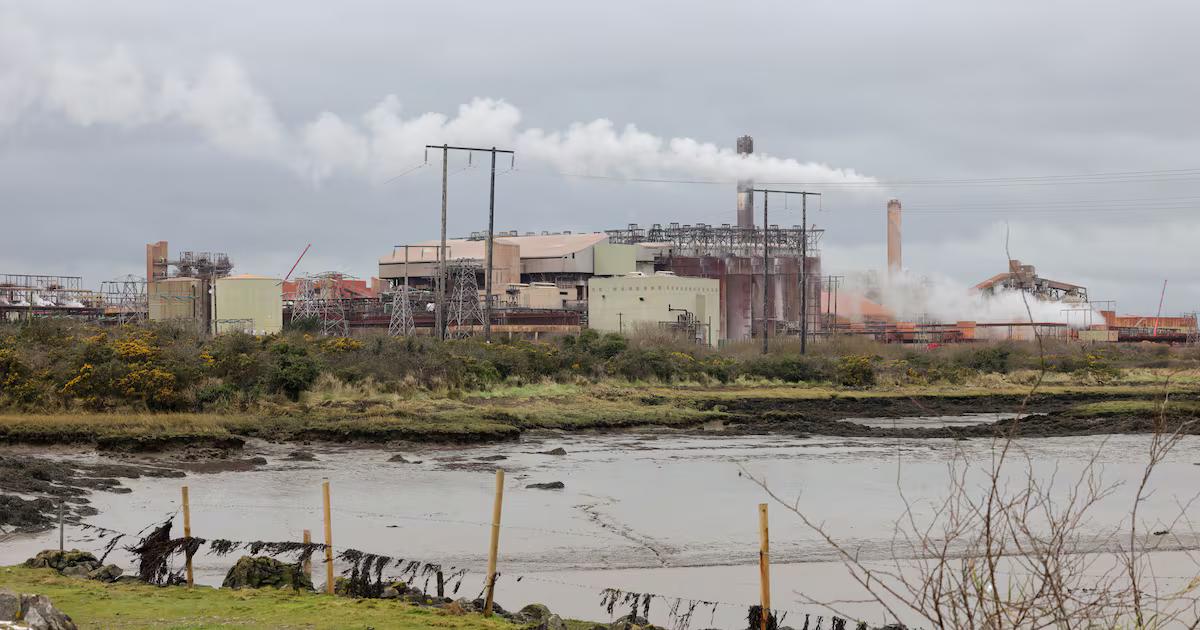
Swedish authorities have determined that Rusal, the metals giant that owns the Aughinish Alumina refinery in Co Limerick, remains under the control of sanctioned oligarch Oleg Deripaska.
The Shannon estuary plant is under threat from EU measures to block large exports of alumina to Russia. There is concern about the material being used in aluminium for missiles, tanks and aircraft in Russian president Vladimir Putin’s four-year war on Ukraine.
The ruling from Skatteverket, Sweden’s tax authority, states that therefore all of Rusal’s operation in Europe, a group that includes the Irish plant, should be subject to EU sanctions targeting Russia, including the freezing of assets.
The immediate effects only apply to Kubal, an aluminium smelter in Sweden that is owned by Rusal and relies on supplies of alumina from Aughinish. The Swedish tax agency has frozen 56,787,686 SEK (€5.1 million) in Kubal’s tax account in response.
Two senior Kubal executives were also recently arrested by Swedish police as part of a separate investigation into sanctions evasion.
Despite the investigation and judgment only concerning Rusal’s Swedish operations, the decision will increase pressure on Ireland and the EU to take action regarding Aughinish.
A Department of Enterprise spokeswoman said it is “aware that the Swedish Tax Agency is conducting an investigation into certain matters relating to the Rusal owned plant Kubal”.
“The Department has no comment to make at this time on the investigation which is underway in that jurisdiction,” she added.
The Irish Government is finalising an investigation into Aughinish following disclosures in The Irish Times that the plant is exporting vast amount of alumina, the raw material for aluminium, which ends up in a supply chain that supplies Russia’s military industry.
The investigation and the latest developments in Sweden are likely to be discussed this week during events to mark Ireland taking over the EU presidency for the next six months.
At the opening ceremony of the presidency today, Ukrainian president Volodymyr Zelenskiy, a special guest of the Government, used his address to criticise a failure to sanction companies operating in Europe, who under the control of Russian oligarchs, continued to supply Russia’s military efforts.
In language which will be read as a clear reference to Aughinish Alumina, Zelenskiy said more had to be done to choke off the supply of key raw materials feeding Vladimir Putin’s war machine.
“This also includes companies in European countries whose only focus is to work for Russia. Unfortunately, there are companies in Europe that are owned or effectively controlled by Russia and its sanctioned oligarchs. They keep supplying the Russians with essential materials even now,” he told gathered politicians and diplomats in Dublin Castle.
Stronger EU sanctions were needed to target the “tools” Moscow used to keep its invasion going, he said.
On Friday, EU Commission president Ursula von der Leyen will host a meeting of European commissioners in Cork.
The judgment of the Swedish authorities was widely expected following a report by tax investigators earlier this year recommending the funds be frozen.
In its 73-page judgment, which was been seen by The Irish Times and first reported on Tuesday by the local Swedish newspaper Sundsvall Tidning, Skatteverket determined the Swedish plant is under the control of Rusal, which is in turn under the control of the energy conglomerate EN+.
EN+ was founded by Deripaska in 2002. In 2018, Deripaska, EN+ and Rusal were placed under US sanctions over alleged interference in the US presidential election. This placed the future of Aughinish and its 470 jobs in immediate danger.
Following intensive lobbying from the Irish Government, the US agreed to lift the sanctions in return for Deripaska reducing his ownership and voting rights in EN+ to below 50 per cent.
The board was also restructured so that eight out of 12 members were independent of Deripaska.
However, the Swedish tax agency ruled this arrangement was a fiction. It pointed to “presidential Decree No. 16”, an order from Russian president Vladimir Putin that applies to large Russia companies. Under the order, shareholders from “unfriendly states” are precluded from voting on company matters.
When these shareholders are excluded, Deripaska’s controlling stake rises 53 per cent while his voting power on the board stands at 70 per cent, Skatteverket said.
“Accordingly, Deripaska alone can take all decisions falling within the competence of the general meeting,” it stated.
The agency said Deripaska retains this control, whether or not he decides to utilise it.
It follows, the authority stated, that the assets of EN+, including Rusal, should be subject to EU sanctions introduced in 2022 following Russia’s full-scale invasion of Ukraine.
Deripaska, a billionaire who has been described as “Putin’s favourite oligarch”, is under EU sanctions over his role in supporting the invasion of Ukraine through the manufacture of military hardware for Russia.
The EU commission found he owns Russian Machines, “an important supplier of weapons and military equipment to the Russian armed forces”.
Kubal has appealed the tax judgment on several grounds. It has also warned the ruling will have severe economic consequences for the region.
Aughinish Alumina previously said Deripaska “does not exert any control over the day-to-day operations and strategy at the Aughinish plant”.
Meanwhile, Taoiseach Micheál Martin on Wednesday morning rejected any suggestion that Ireland’s commitment to Ukraine has been damaged by the continued export of alumina from the Aughinish Alumina refinery to Russia.
Martin said he had not personally asked the European Commission not to sanction Aughinish Alumina in Shannon. When asked if the Government had made such a request, he replied: “In terms of the Aughinish issue, alumina has not been a substance at European level that has been put on the sanctions list. The reason being that it’s part of a wider European supply chain issue.”
The European Commission makes proposals in respect of sanctions, and Ireland has been a strong supporter of sanctions, he said.
When asked if the Government had asked the European Commission to provide financial support if Aughinish had to stop making alumina, the Taoiseach said “not specifically” but added the situation would have to be weighed up.
Wednesday, July 1, 2026