Economic Pragmatism and the Reconfiguration of the International Order
The international system appears to have entered a new historical phase, characterizedby a gradual reconfiguration of power relations and by the resurgence of economicpragmatism as a guiding principle of international affairs.
Morocco World News
The international system appears to have entered a new historical phase, characterized by a gradual reconfiguration of power relations and by the resurgence of economic pragmatism as a guiding principle of international affairs. After years dominated by geopolitical tensions, strategic rivalries, and confrontational dynamics, major powers seem increasingly aware of the considerable costs that open conflicts impose on global stability, financial markets, and international production and supply chains.
This evolution does not signify the disappearance of international rivalries; rather, it reflects a transformation in their nature and instruments. The world is not moving toward lasting peace in the traditional sense of the term. Instead, it is evolving toward a pragmatic management of conflicts and antagonisms in which economic, energy, and commercial considerations occupy an increasingly central position. States are no longer primarily concerned with eliminating their differences; rather, they seek to prevent them from undermining the delicate balances necessary for the functioning of the global economy.
In this context, national economies and global markets have become key instruments for regulating geopolitical interactions. Trade flows, strategic investments, energy markets, advanced technologies, and supply chains now constitute sources of influence that are often more consequential than military displays or ideological competition alone. Major powers continue to defend their national interests and spheres of influence, yet they increasingly favor indirect forms of competition based on technological superiority, financial capabilities, innovation, and transnational economic partnerships.
This transformation can largely be explained by the cumulative effects of recent crises, including the global pandemic, the war in Ukraine, conflicts in the Middle East, rising inflation, energy shortages, disruptions to supply chains, and the slowdown of the world economy. These developments have weakened both advanced and emerging economies, making economic stability an indispensable strategic necessity. Prolonged conflicts are no longer costly merely in military terms; they also impose significant burdens on markets, investments, and global growth. Tensions between the United States and Iran provide a clear illustration of this reality.
The gradual easing of certain international tensions reflects an implicit determination to preserve the fundamental mechanisms of global economic interdependence. Several sensitive geopolitical issues are now managed through a logic of “controlled de-escalation,” whereby international actors seek above all to avoid ruptures that could trigger major economic shocks. The severe consequences of a closure of the Strait of Hormuz for global trade and energy prices underscore the importance of this pragmatic approach.
The relationship between China and the United States particularly exemplifies this shift toward economic realism. Despite the persistence of deep strategic rivalry—especially in advanced technologies, artificial intelligence, semiconductors, and the Taiwan issue—the two powers remain bound by a high degree of economic interdependence, which significantly reduces the likelihood of a complete decoupling.
The primary objective of both countries appears not to be the definitive resolution of all disputes, but rather the prevention of a new cycle of escalation that could further destabilize the global economy. Following the substantial tariff increases introduced by the U.S. administration in 2025 and the subsequent Chinese retaliatory measures, both sides opted for a strategy of partial de-escalation aimed at safeguarding their mutual economic interests. Even in the absence of a comprehensive agreement, the resumption of dialogue has helped preserve essential diplomatic and commercial channels.
Discussions between the two countries have also addressed several important regional geopolitical issues, including U.S.–Iran relations, the security of the Strait of Hormuz, and global energy balances.
Within this broader context, recent meetings between Chinese leaders and Russian President Vladimir Putin further confirm the emergence of a more multipolar international order in which China occupies an indispensable position. Beijing has also taken the noteworthy step of granting tariff exemptions to African countries on a range of products, thereby reinforcing its role not only as a key actor in global economic stability but also as an important stakeholder in the management of regional and international crises.
The contemporary world thus appears to be moving toward a form of geo-economic pragmatism in which competition among major powers remains very much alive, while economic interdependence imposes limits on direct confrontation. Major transformations in the international system are no longer manifested solely through ideological discourse or displays of military power; they increasingly emerge through investment decisions, trade agreements, technological partnerships, and the gradual reconfiguration of strategic interests.
Understanding this new international configuration therefore requires careful attention to global economic dynamics alongside diplomatic, technological, and military developments. Contemporary power relations can no longer be reduced to military capabilities or territorial reach, as was often the case during the Cold War and earlier periods of ideological confrontation. Power is now exercised through more complex and less visible mechanisms, including control over global supply chains, access to energy resources and strategic raw materials, technological dominance, monetary influence, and the capacity to invest internationally.
In this new environment, the most influential states are not merely those possessing powerful armed forces; they are also those capable of setting technological standards, controlling digital infrastructures, dominating global financial networks, and directing international trade flows. Competition over semiconductors, digital data, rare earth minerals, and energy networks vividly illustrates this profound transformation in the nature of international power. Contemporary conflicts increasingly assume hybrid forms in which economic interests, finance, cybersecurity, scientific innovation, and commercial diplomacy become strategic instruments as important as conventional military means.
This transformation also explains the emergence of a paradoxical form of interdependence among major powers. Even when geopolitical tensions arise, states often remain closely connected through shared economic interests, making any abrupt rupture extremely costly. As an Egyptian proverb aptly states, “Interests reconcile.” The United States and China, for example, engage in broad strategic competition while remaining deeply interconnected in commercial, financial, and technological spheres. This reality necessitates a more pragmatic approach to the management of international conflicts—one focused on maintaining balances rather than pursuing exclusion or zero-sum confrontation.
Moreover, economic globalization has significantly strengthened the role of non-state actors in shaping international relations. Multinational corporations, sovereign wealth funds, international financial institutions, and global technology companies now possess levels of influence that sometimes exceed those of certain states. Decisions made by major digital platforms or global financial markets can have immediate consequences for the economic and political stability of entire regions.
Several Nobel Prize-winning economists, most notably Joseph Stiglitz, have developed ideas that directly or indirectly support the argument that economic interests play a central role in shaping state behavior and the international order. Stiglitz contends that globalization and economic interdependence have become structural foundations of global governance. Although critical of certain dimensions of globalization, he maintains that economic issues now lie at the heart of contemporary international politics.
Within this framework, the very concept of sovereignty is undergoing profound redefinition. Sovereignty is no longer limited to the protection of geographical borders; it increasingly encompasses the capacity to secure autonomy in energy, technology, food production, and the digital sphere. States are therefore striving to safeguard their production chains, strategic resources, and critical infrastructures in order to reduce vulnerabilities in a world characterized by intense economic interdependence and permanent competition.
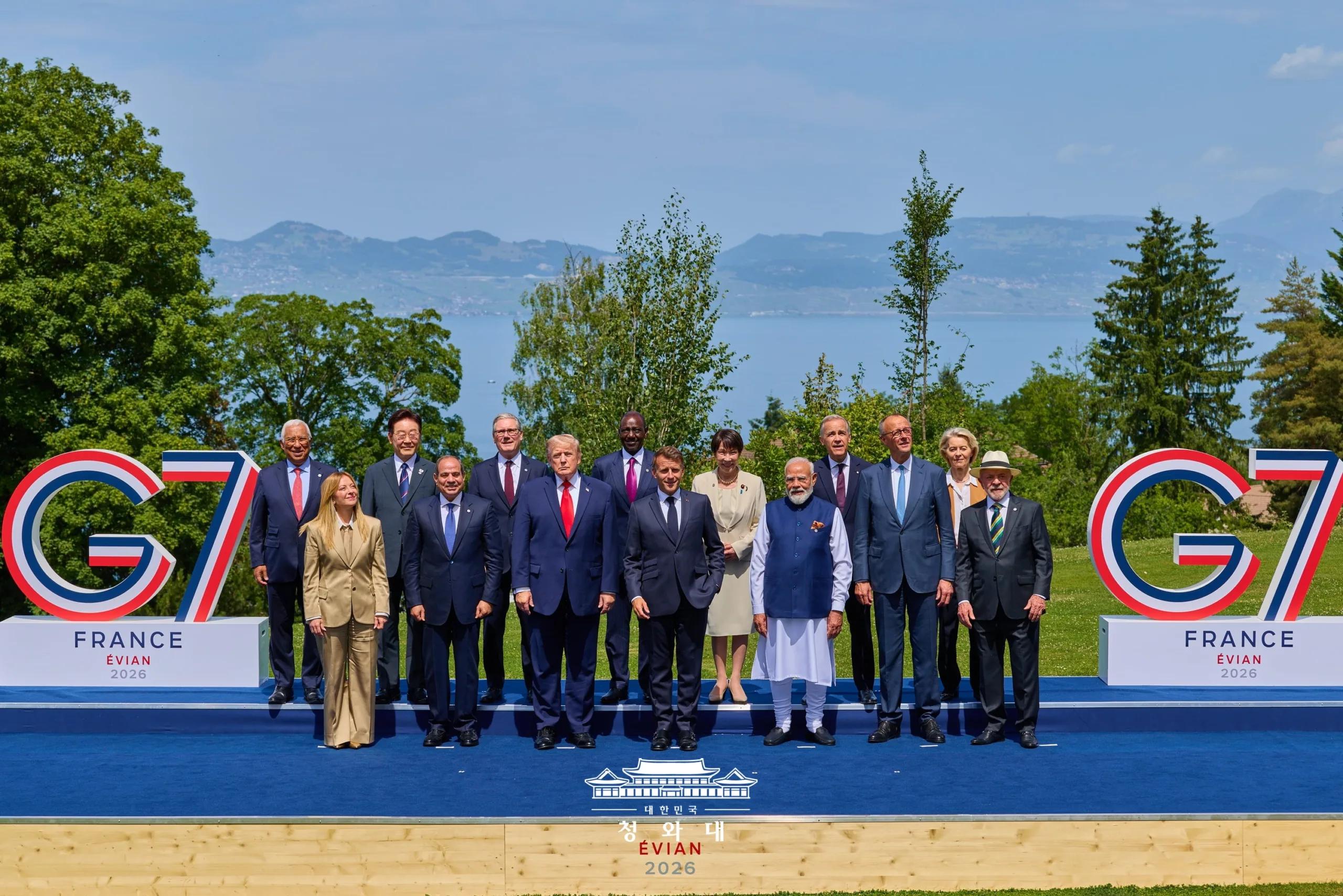
Recent discussions at the G7 Summit highlighted the strategic economic priorities of Western powers within a tense international environment whose potential repercussions for energy markets, global trade, and regional balances could be substantial. In a highly interconnected global economy, diplomatic developments directly influence industrial strategies and invite renewed reflection on the transformations currently reshaping the world economy.
Saturday, June 27, 2026