This Many Minutes of Strength Training Might Help You Live Longer
New research pinpoints the number of minutes of strength training you need to live longer. Here's what it found.
Women's Health
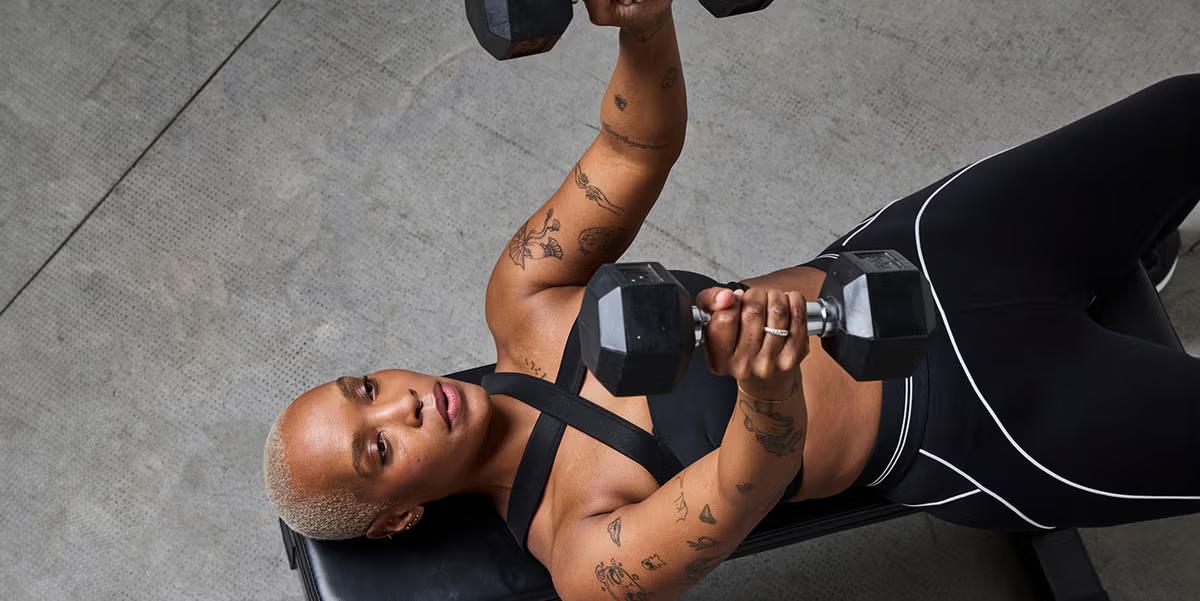
When you’re pressed for time at the gym, it’s tempting to skip strength training. After all, data shows that only 24 percent of Americans actually incorporate lifting into their workout plans. But the latest research suggests that in doing so, you could be doing a disservice to future you. While we know that lifting can make you stronger, this news says that it might also help you live longer.
The study, published in the British Journal of Sports Medicine, makes a solid case for consistently incorporating lifting into your workout plan. That doesn’t mean you should skip cardio, though—the data actually supports doing a solid mix of both.
Here, doctors and study authors break down the findings.
Meet the experts: Joseph J. Ciotola, MD, an orthopedic surgeon at Baltimore’s Mercy Medical Center; Yiwen Zhang, PhD, lead study author and postdoctoral researcher in the Department of Nutrition at Harvard T.H. Chan School of Public Health; and Christopher Tanayan, MD, sports cardiologist at Northwell’s Lenox Hill Hospital.
Researchers analyzed data from more than 147,000 adults who participated in the Health Professionals Follow-up Study, the Nurses’ Health Study, and the Nurses’ Health Study II. As part of those cohorts, participants were asked to answer questions every two years for up to 30 years about their weekly cardio and strength training workouts.
They found that participants who averaged 90 to 120 minutes of weekly resistance training had a 13 percent lower risk of dying from any cause during the study. They also had a 19 percent lower risk of dying from cardiovascular disease and a 27 percent lower risk of dying from neurological disease.
But the researchers discovered that the risk of dying during the study period was lowest among people who combined aerobic exercise with 60 to 119 minutes of resistance training each week.
Also worth noting: The perks of strength training plateaued after 120 minutes a week, so clocking in time beyond that didn’t have any extra benefits—at least not in this study.
It’s important to note that the study found a link between doing strength training (or a combination of strength training and cardio) and a lower risk of dying. It didn’t prove that these forms of exercise led to longer lifespans—it only found an association. That said, previous research has found that about an hour of strength training per week can support longevity, suggesting there might be more to it.
Doctors have a few theories on why this might be. “Strength training builds muscle, and muscle is metabolically active,” says Joseph J. Ciotola, MD, an orthopedic surgeon at Baltimore’s Mercy Medical Center. “It keeps your system strong and active. It helps your joints, helps your bone density, cardiovascular system, and helps you burn more calories.” All of these factors help support overall health, he points out.
Cardio and strength training also work on different pathways in the body, says Yiwen Zhang, PhD, lead study author and postdoctoral researcher in the Department of Nutrition at Harvard T.H. Chan School of Public Health. As a result, a mix of both exercises may help raise the odds you’ll take care of multiple areas of health.
Christopher Tanayan, MD, sports cardiologist at Northwell’s Lenox Hill Hospital, agrees. “Different protective pathways suggest that a combination is better than either alone,” he says.
The study found that people had a lower risk of death when they engaged in at least 45 Metabolic Equivalent of Task (MET) hours per week of aerobic activity. But that doesn’t mean they were working out for 45 hours a week.
MET is a measurement of how much energy you use during physical activity, and different activities have different MET scores. For example, one MET is the amount of energy you use while sitting quietly, while vigorous activities like walking fast, running, or shoveling snow may use up six or more METs. So, sticking with the recommended guidelines of doing at least 150 minutes of moderate-intensity exercise a week (or 30 minutes for five days) should get you there.
The best thing you can do is to create a workout that feels realistic and sustainable, Zhang says. “For those who already do aerobic activity, adding even some resistance training may provide additional benefit,” he says. “For people who are less active, the key message is that small amounts can still matter, and building a routine gradually may be more effective than trying to do too much at once.”
It’s important to find something that feels right to you, but if you need a jumping-off point, Dr. Tanayan suggests two one-hour resistance training sessions a week, along with three to four aerobic activities. Dr. Ciotola also recommends pushing yourself (to healthy limits) when exercising. “You want to be in a little discomfort, but you don’t want to overtrain and overdo it,” he says.
Carina Hsieh, MPH, is the deputy features editor of Women’s Health. She has more than a decade’s worth of experience working in media and has covered everything from beauty, fashion, travel, lifestyle, pets, to health.
She began her career as an intern in the fashion closet at Cosmopolitan where she worked her way up to Senior Sex & Relationships Editor. While covering women’s health there, she discovered her passion for health service journalism and took a break to get her Masters in Public Health. Post-grad school, she worked as a freelance writer and as The Daily Beast’s first Beauty, Health, and Wellness Reporter.
Carina is an alum of the Fashion Institute of Technology and the Yale School of Public Health. She and her French Bulldog, Bao Bao, split their time between Brooklyn and Connecticut. She enjoys reformer Pilates, (slow) running, and smelling the fancy toiletries in boutique fitness class locker rooms.
Saturday, June 27, 2026