Harsh UVB bursts leave tadpoles with more DNA damage than longer exposure
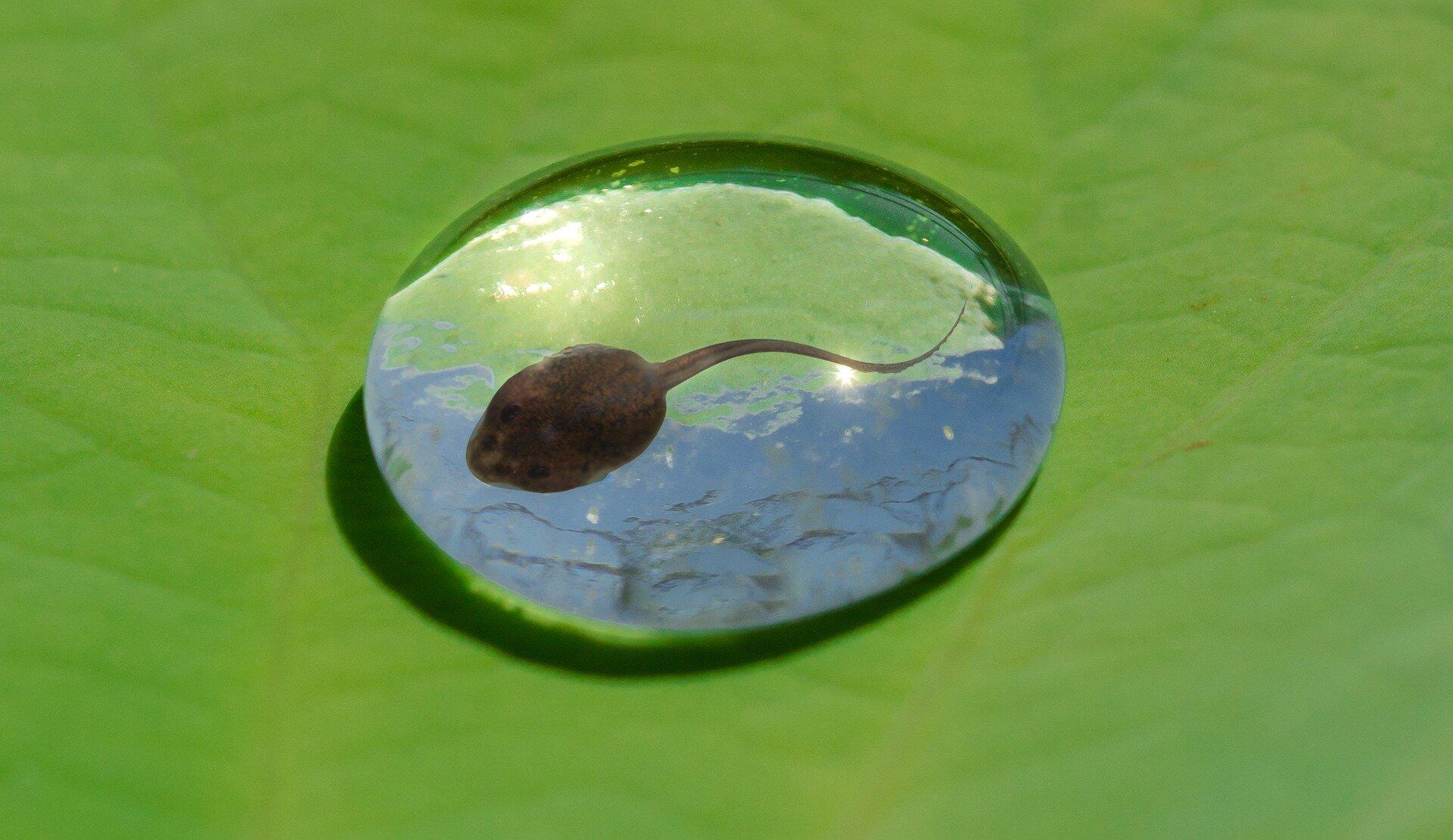
Sunburn is a serious problem in the Southern Hemisphere, where depleted ozone provides less protection from UVB. Tadpoles are at particular risk because they are growing rapidly, making them vulnerable to UVB DNA damage. Niclas Lundsgaard of The University of Queensland (UQ), Australia, says the seriousness of sunburn was thought to be directly linked to the degree of exposure, so that a long, weak dose of UVB would yield the same DNA damage as a short, intense dose that resulted in the same overall exposure.
Phys.org
Sunburn is a serious problem in the Southern Hemisphere, where depleted ozone provides less protection from UVB. Tadpoles are at particular risk because they are growing rapidly, making them vulnerable to UVB DNA damage. Niclas Lundsgaard of The University of Queensland (UQ), Australia, says the seriousness of sunburn was thought to be directly linked to the degree of exposure, so that a long, weak dose of UVB would yield the same DNA damage as a short, intense dose that resulted in the same overall exposure.
But Lundsgaard, Craig Franklin and Rebecca Cramp (also from UQ) weren't sure. A short, intense UVB dose can be three times more lethal for striped marsh frog tadpoles (Limnodynastes peronii) than a long, weak UVB dose amounting to the same overall exposure. Now, writing in the Journal of Experimental Biology, the team reports that sunburned tadpoles suffer significantly more DNA damage from short, intense doses of UVB than longer, weaker doses, which could dramatically increase mortality on sunny days.
Collecting recently laid frogspawn from a creek in Brisbane, Lundsgaard took them to the UV-free lab, where they developed for five weeks. Then he turned on the UVB, making sure that different tadpoles got the same total exposure to UVB, no matter how strong the dose, by adjusting how long the UV lights were on.
Some tadpoles received one intense (80μW/cm2) dose of UVB—simulating the light levels in a clear pond—for an hour, while others received a second strong hourlong dose a day later. Meanwhile, he turned down the sun lamps for other tadpoles, so the UVB was less intense (40μW/cm2), but kept the lamps on for two hours so the tadpoles received the same overall exposure, with a fourth group of tadpoles receiving a second weak dose of UVB a day later.
Finally, Lundsgaard checked for evidence of DNA damage.
Alarmingly, the strength of UVB that the developing tadpoles had experienced produced a dramatic impact. The tadpoles that experienced the most intense doses of UVB accumulated damage almost three times faster, resulting in 47% more DNA damage than the tadpoles exposed to mild sunburn.
Lundsgaard then checked the tadpoles that were exposed to UVB on consecutive days, and the tadpoles that had experienced the strongest sunburn were in worse shape than the tadpoles that had received only mild UVB doses.
The intensely sunburned tadpoles carried more than twice as much DNA damage into the second day, and the tadpoles that experienced two days of sunburn had 20% more DNA damage than the tadpoles that experienced sunburn on a single day.
Surprisingly, Lundsgaard noticed that the smallest tadpoles seemed to suffer the most DNA damage, experiencing 50% more than their larger siblings, possibly thanks to their larger surface area relative to their mass.
Even though the striped marsh frog tadpoles had experienced the same amount of UVB, the strength of the sunburn made an enormous difference. The tadpoles exposed to the high UVB dose accumulated more dangerous DNA damage than those that had received the same total UVB exposure over longer periods, leaving them at greater risk of mortality.
Lundsgaard warns that fish and corals could be in similar danger from the sun's rays. "The larvae of other aquatic animals might struggle with more frequent exposure to short, intense UVB," he says.
However, Lundsgaard adds that we cannot draw any conclusions about whether stronger sunburn is more dangerous for people.
"Frogs and humans have different mechanisms for repairing DNA damage caused by UV radiation," he says. "Our study has highlighted that the risk of sun exposure is not necessarily measured simply by how much radiation you are exposed to."
Niclas U. Lundsgaard et al, When repair mechanisms fail to keep up: high UVB irradiance causes disproportionate accumulation of DNA lesions, Journal of Experimental Biology (2026). DOI: 10.1242/jeb.252227
Journal information: Journal of Experimental Biology
Master's in TESOL from The New School. Passionate about language learning and editing science news on biology and space exploration. Full profile →
Bachelor's in mathematical biology, Master's in creative writing. Well-traveled with unique perspectives on science and language. Full profile →
Thursday, July 2, 2026