Regional Health Experts Convene to Share Knowledge and Experiences on Rising Cases of NCDs and Mental Health Across Eastern and Southern Africa
June 24, 2026 (DJIBOUTI, Djibouti): Regional health experts and policymakers are stepping up efforts to combat a quiet but growing...
IGAD
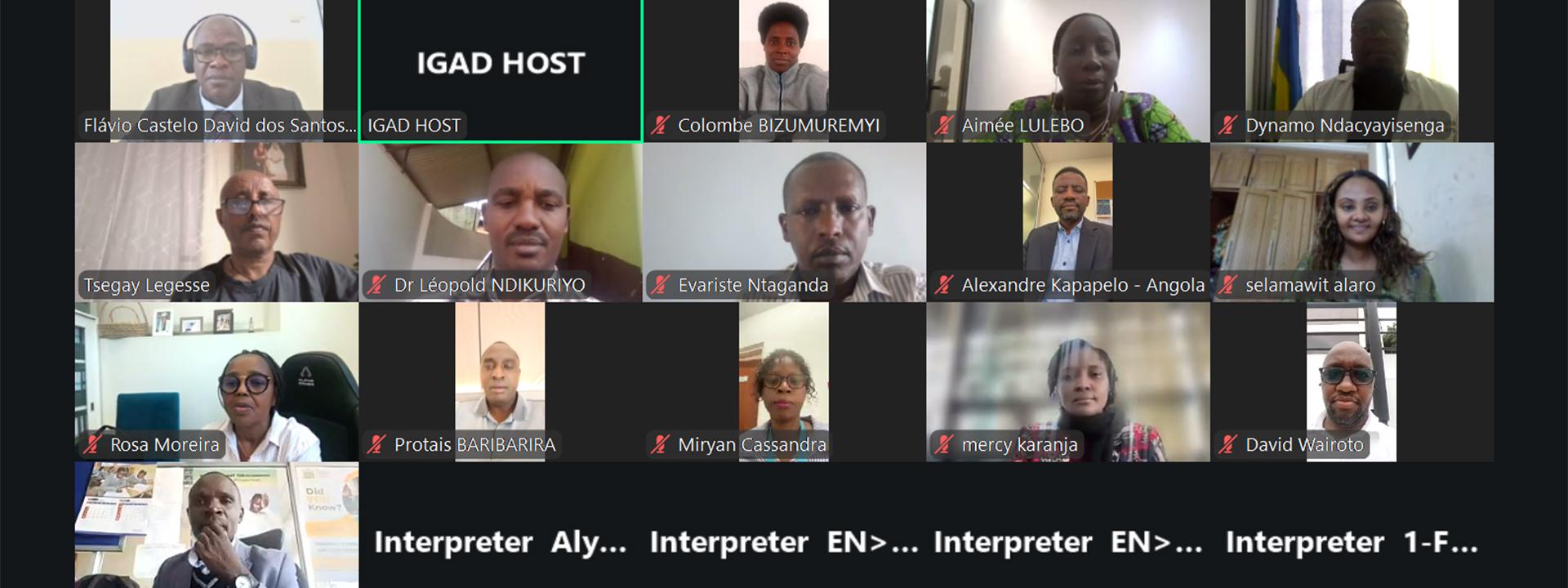
June 24, 2026 (DJIBOUTI, Djibouti): Regional health experts and policymakers are stepping up efforts to combat a quiet but growing crisis: the rise of Non-Communicable Diseases (NCDs) and mental health conditions across Eastern and Southern Africa. In a powerful display of regional solidarity, the Intergovernmental Authority on Development (IGAD), alongside the Government of Sao Tome & Principe, convened the virtual 4th Community of Practice (COP) Meeting for NCDs and Mental Health. The high-level session brought together health experts and medical researchers from participating countries under the Health Emergency Preparedness, Response and Resilience – Multi Phase Programmatic Approach (HEPRR-MPA) programme from the East and Southern Africa.
Supporting Integration of Mental Health and Psychosocial Support (MHPSS) in Health Emergency Preparedness and Response is a key component under the HEPRR-MPA Programme that is currently being implemented across 11 countries—Angola, Botswana, Burundi, the Democratic Republic of Congo (DRC), Ethiopia, Kenya, Malawi, Rwanda, Mozambique, Sao Tome & Principe, and Zambia. The COP serves as a vital knowledge-exchange hub.
This session of the COP prioritised peer-to-peer learning, allowing countries to benchmark their progress and evaluate distinct survey methodologies. Ethiopia presented results from the 2024 ‘STEPwise approach to NCD risk factor surveillance’ (STEPS) survey results, which utilised a rigorous three-stage approach covering behavioural risk factors, physical measurements, and biological samples across 14 regions. The findings revealed that hypertension now affects 17.3% of the population, diabetes sits at 4.2%, and depression has reached 2.3%, driven heavily by low physical activity and a lack of fruit and vegetable consumption.
Experts from DRC presented STEPS study findings from three provinces that exposed a heavy psychological toll on communities. The DRC data revealed a depression prevalence of 9.2% overall, which spiked to an astonishing 61.1% among surveyed men. Meanwhile, Burundi participants presented preliminary data from the Country’s national mental health survey of over 4,600 households. The results showed that 26.3% of respondents experience psychological distress, 4.8% suffer from depression, and 8.1% battle suicidal thoughts. Crucially, the study exposed severe gaps in healthcare infrastructure, noting that critical mental health medications and treatment guidelines remain largely unavailable at local health facilities.
A major highlight of the COP’s knowledge-sharing model was the showcase of scalable, country-led innovations. To address the severe shortage of specialists and tackle generational trauma, Rwanda shared its breakthrough school-based mentoring program. Delegates learned how Rwanda’s Ministry of Health and Ministry of Education bypassed budget limitations by training 3,000 existing schoolteachers as mental health mentors across 22 districts—an ingenious solution that has already reached 36,305 students with low intensity counseling by lay school counselors and referred 3600 referred to Health facilities for a full diagnostic evaluation and treatment in 2025.
The meeting provided critical lessons for the region. Delegates concluded that health tracking cannot operate in silos; engaging non-health sector actors like education and finance from the inception phase of surveys is vital. Furthermore, Rwanda’s success proved that countries can scale up vital programs with limited resources by creatively training existing staff. Finally, as demonstrated by Ethiopia and DRC, adding specialised modules to standard health surveys yields highly actionable, country-specific data that must immediately be used to rewrite and update expired national healthcare strategies.
Moving forward, the DRC plans to expand surveys to eight more provinces with World Bank support once the Ebola epidemic is controlled, while Burundi will use its data to overhaul its national strategic plan.
Friday, June 26, 2026