Political Memory of the Sahara: Tribe, Legitimacy and National Unity (II)
In a previous article, entitled ‘Political Memory of the Sahara: Tribe, Legitimacy and National Unity’, we addressed a dimension that is almost always overlo...
Atalayar
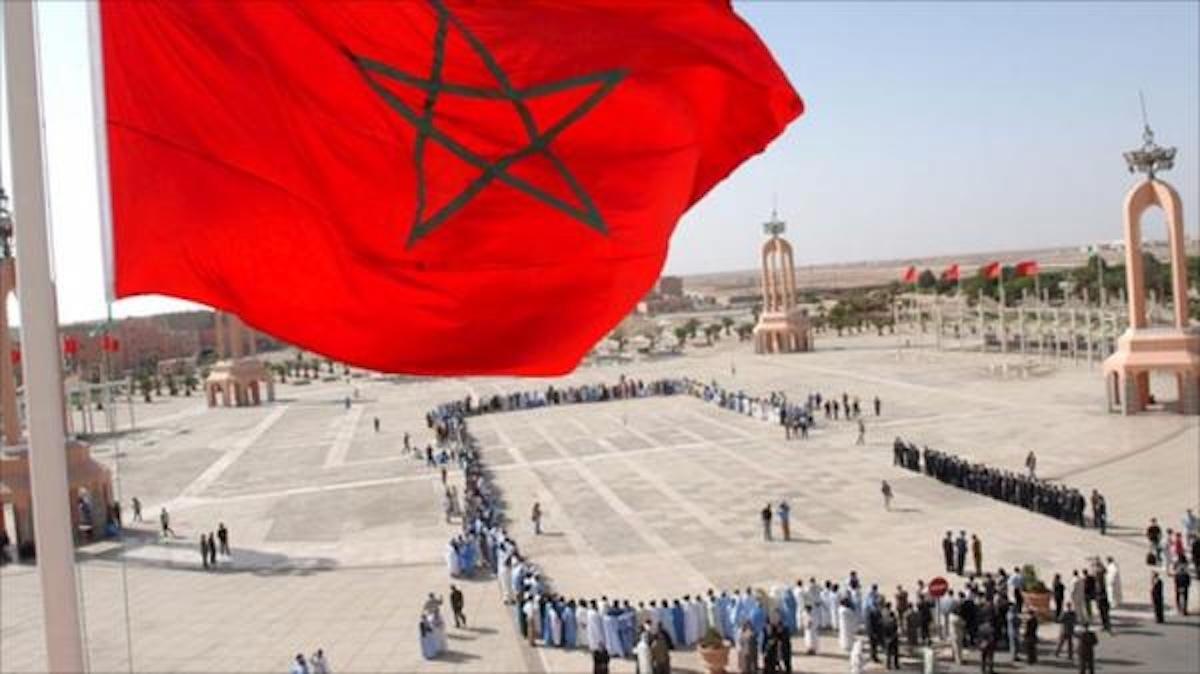
In a previous article, entitled ‘Political Memory of the Sahara: Tribe, Legitimacy and National Unity’, we addressed a dimension that is almost always overlooked in the debate on the Sahara: that of tribal structures, the chiujs, the notables and the traditional forms of authority that for centuries shaped Sahrawi social, political and community life
That text was based on a fundamental idea. The Sahara did not begin in 1973. Its history, identity and forms of legitimacy cannot be reduced to the emergence of a political-military organisation that arose within the ideological context of the Cold War. Before that time, there existed a society, a collective memory, an internal organisation, tribal balances, recognised authorities and distinct forms of mediation, representation and social cohesion.
Now that the conflict appears to be entering a decisive phase, with the Moroccan proposal for autonomy taking on increasing international prominence and a diplomatic framework increasingly geared towards a political, realistic and mutually acceptable solution, it is time to start thinking about the aftermath as well. Not only about the legal formula that might resolve the dispute, but also about the social and institutional architecture that will need to give substance, roots and stability to that solution.
This second reflection aims precisely to move in that direction. If the chiujs and Sahrawi notables have historically played a role of moral authority, social dialogue and community balance, it is worth considering what role they might have in a future effective autonomy for the Sahara within the framework of Moroccan national unity.
The question does not stem from any tribal nostalgia. Nor does it seek to place traditional authority above modern institutions. Its purpose is quite different. A strong framework for autonomy must be grounded in the real society it aims to serve, and in the Sahrawi case, that society has been deeply shaped by the tribe, the extended family, genealogy, prestige, mediation, honour, one’s word, and authority recognised by the community.
To claim that all this can be made to disappear by decree would be naïve. To regard it as useless in a future autonomous organisation would be politically impoverishing.
It is worth clarifying a terminological issue first. When we speak of chiujs, tribal chiefs or Sahrawi notables, we are referring to closely related concepts that sometimes overlap. The term ‘chiuj’ refers to the chief or leading authority within a tribe, faction or group. The ‘tribal chief’ is its most direct translation into Spanish political terminology. The term ‘notable’ broadens the scope to include figures of prestige or recognised influence within the community.
We are not, therefore, talking about mere administrative posts. We are talking about a form of social legitimacy predating the colonial era, recognisable in societies where authority was not always expressed through modern state institutions, but rather through balances of power, pacts, alliances, experience, family prestige and the capacity for mediation.
In Moroccan political tradition, this traditional authority also takes on a deeper dimension through the bay’a, the historic pact of allegiance that links the sovereign to recognised communities and authorities. From this perspective, the Sahrawi chiujs are not merely local mediators or guardians of community customs, but figures who, at certain moments in history, have also embodied a relationship of loyalty, representation and intermediation with the Alawite throne and with the figure of the King as Commander of the Faithful. This dimension helps to explain why, for Rabat, their role retains a political significance that goes beyond folklore or the mere administration of customs.
Therein lies one of the most frequent and simplistic errors of certain self-serving criticism in Spain directed against Sahrawi notables. They are portrayed as mere creatures of Spanish colonialism, as if their authority had arisen from the colonial administration rather than from the historical structure of Sahrawi society itself.
It is clear that Spain, like any colonial administration, sought to make use of existing authorities to organise, control or manage the territory. It is also evident that the institutionalised Yemaa operated within a political framework shaped by the Franco regime and by the interests of the administering power. But it does not follow from this that the chiujs, the tribal chiefs or the Sahrawi notables were an artificial invention of the colonial era.
Spain was able to rely on them precisely because these figures already existed, because they were deeply rooted in society and because they fulfilled genuine functions of dialogue, mediation and community representation. The fact that a colonial administration sought to channel tribal authority does not mean that such authority arose with the colonial era or that it ceased to exist with it.
The very existence of the Yemaa expresses this ambivalence. It was not a modern democratic chamber, nor can it be presented as a free parliament in the contemporary sense. Nor, however, can it be reduced to a mere facade with no connection whatsoever to Sahrawi society. It was a colonially conditioned institution, built upon a real social foundation comprising tribes, factions, families, chiujs and notables who were already part of the territory’s traditional organisation.
Something similar can be said of the presence of Sahrawi representatives in the Spanish Cortes during the final phase of the Franco regime. That representation should not be confused with democratic representation, because it took place within the regime’s political structures. Even so, it reveals something significant. Even the Spanish administration needed to channel Sahrawi representation through local, tribal and community figures capable of acting as intermediaries. It was a limited representation, conditioned by and subject to the colonial framework, but it shows that the notables fulfilled a recognisable political function.
That is why it is far too simplistic and reductionist to dismiss them as mere collaborators or beneficiaries of colonial power. The real history was more complex and two-way. There was adaptation, survival, negotiation, pressure, calculation, diverse loyalties and mutual exploitation. That complexity does not negate the pre-existing social legitimacy of the notables nor their role as an expression of a Sahrawi society that cannot be reduced to the Polisario’s later narrative.
From its very origins, the Polisario tended to view the tribe with suspicion. Its emergence in the 1970s, amidst a fervent revolutionary, anti-imperialist and socialist upsurge, fostered a centralising and militant vision of political representation. Within this framework, tribal structures were frequently portrayed as backward, divisive or reactionary.
However, not even the Polisario managed to eliminate them entirely. Tribal, family and regional dynamics continued to operate within the Tindouf camps, shaping internal loyalties, power balances and underlying tensions. The internal purges and brutal repression of the late 1980s, highlighted by former dissidents and leaders within the movement itself, demonstrated the extent to which family, tribal and community affiliations remained present beneath the surface of official discourse. The tribe might be denied in propaganda, but it did not disappear from social reality.
This observation raises a fundamental question. If traditional authorities have survived colonial rule, armed conflict, exile, internal Polisario repression and its ideological propaganda, and regional political changes, perhaps their role should be intelligently integrated into the framework of future autonomy.
The Moroccan proposal for autonomy offers precisely a broad political framework for organising Sahrawi self-government under Moroccan sovereignty. From this perspective, it is worth considering how to incorporate those forms of social legitimacy that can strengthen its roots, its effectiveness and its acceptance within the community.
This is not a matter of inventing a Sahrawi ‘exceptionalism’. In various parts of the world, modern political systems have preserved, adapted or integrated historical, traditional, territorial or cultural institutions within contemporary state frameworks.
The case of the House of Lords in the United Kingdom is particularly illustrative. Not because the Sahrawi chiujs can be mechanically compared with the British lords – something that is obvious – but because it shows how a long-established parliamentary democracy has managed to reform and limit a historical institution without completely severing its link with tradition.
The United Kingdom is not based on a Constitution codified in a single text, but on a historical framework comprising statutes, precedents, constitutional conventions, common law and elements of customary law. Within this framework, the House of Lords has survived, reformed, limited and subordinated to the democratic primacy of the House of Commons, whilst retaining a role of scrutiny, experience, continuity and institutional balance.
The lesson is not to copy the British model. The relevant idea is another. Political modernity does not always require the destruction of historical legitimacies. At times, it organises them, reforms them and makes them compatible with democratic institutions.
Other examples point in a similar direction. In Botswana, there is the Ntlo ya Dikgosi, a consultative chamber of traditional chiefs which participates in matters relating to custom, identity and community organisation. Ghana recognises national and regional structures of traditional chiefdoms. South Africa has integrated traditional leadership bodies within its constitutional framework for matters relating to communities, custom and local government.
The case of Greenland within the Kingdom of Denmark may also be cited. The Greenlandic Inuit population enjoys self-government and specific representation in the Danish Parliament through two seats reserved for Greenland. It is not a tribal model, but rather a territorial and cultural one; nevertheless, it demonstrates that a modern state can institutionally recognise the distinct character of a territory with its own historical identity, language, culture and distinct political sensibilities.
In Europe, the Sami Parliament in Norway offers another example of specific representation linked to a community with its own cultural identity. Nor is this a model that can be transferred literally to the Sahara, but it confirms a useful idea. Historical, territorial or community identities can find institutional channels within modern states without necessarily breaking the overall political unity.
Applied to the Sahara, these examples allow us to draw a prudent conclusion. Recognising the Sahrawi chiujs and notables does not imply a return to the past or the replacement of citizenship with tribal affiliation. It implies acknowledging that certain forms of social authority, historical memory and community mediation can be useful if they are integrated in a clear, regulated manner that is compatible with modern autonomy.
Within this framework, one could envisage, as part of a future autonomous region, a Consultative Council of Sahrawi Notables and Traditional Authorities. Its role would not be merely ceremonial; nor would it constitute a power parallel to the State, nor a body capable of blocking the autonomous region’s democratic institutions.
The most balanced approach would be to recognise its consultative authority, particularly on matters relating to Sahrawi identity, tribal memory, Hassani heritage, community reconciliation, the return of families, local balances and the preservation of the customs, balances and customary norms characteristic of Sahrawi society – always within the legal and institutional framework of the future autonomy and of Moroccan national unity.
It would not replace an autonomous parliament or the regional government, but could provide a second perspective on social, cultural and territorial matters. A body of this nature could help to rebuild ties severed by decades of conflict, displacement, propaganda and family separation. It could serve as a bridge between those who remained in the territory, those who have returned, those living in other regions of Morocco, those forming part of the diaspora and those who still remain in the Tindouf camps. It would also help to integrate diverse Sahrawi perspectives into a stable regional framework, without imposing a single voice or perpetuating the monopoly of any political-military organisation rooted in the past, such as the Polisario Front. Indeed, new voices such as the Sahrawi Movement for Peace advocate for this integration and respect for tribal elders and authorities, as they have made clear in their various texts, articles and annual meetings.
The proposal for autonomy gains momentum precisely when it is understood not only as a legal and political framework, but as an opportunity to endow Sahrawi self-government with historical depth, community roots and a social spirit. A solid national unity need not negate Sahrawi distinctiveness. It can integrate it, organise it and provide it with an institutional channel within a common vision of stability, participation and a shared future.
The challenge, therefore, lies in building an autonomy with deep roots, capable of integrating democratic representation, local identity, social authority, Sahrawi pluralism and a sense of national belonging within a single framework of stability.
An autonomy with a sense of history will be much more than an administration. An autonomy that recognises history, listens to its leading figures, integrates its communities and looks to the future from the social reality of the Sahara can become something far more significant: a political solution with deep roots.
Saturday, June 27, 2026