Scientists searched arthritic knees for different diseases and found something unexpected
A major study reveals that knee arthritis is a single, continuous disease rather than the result of several distinct conditions.
Earth.com
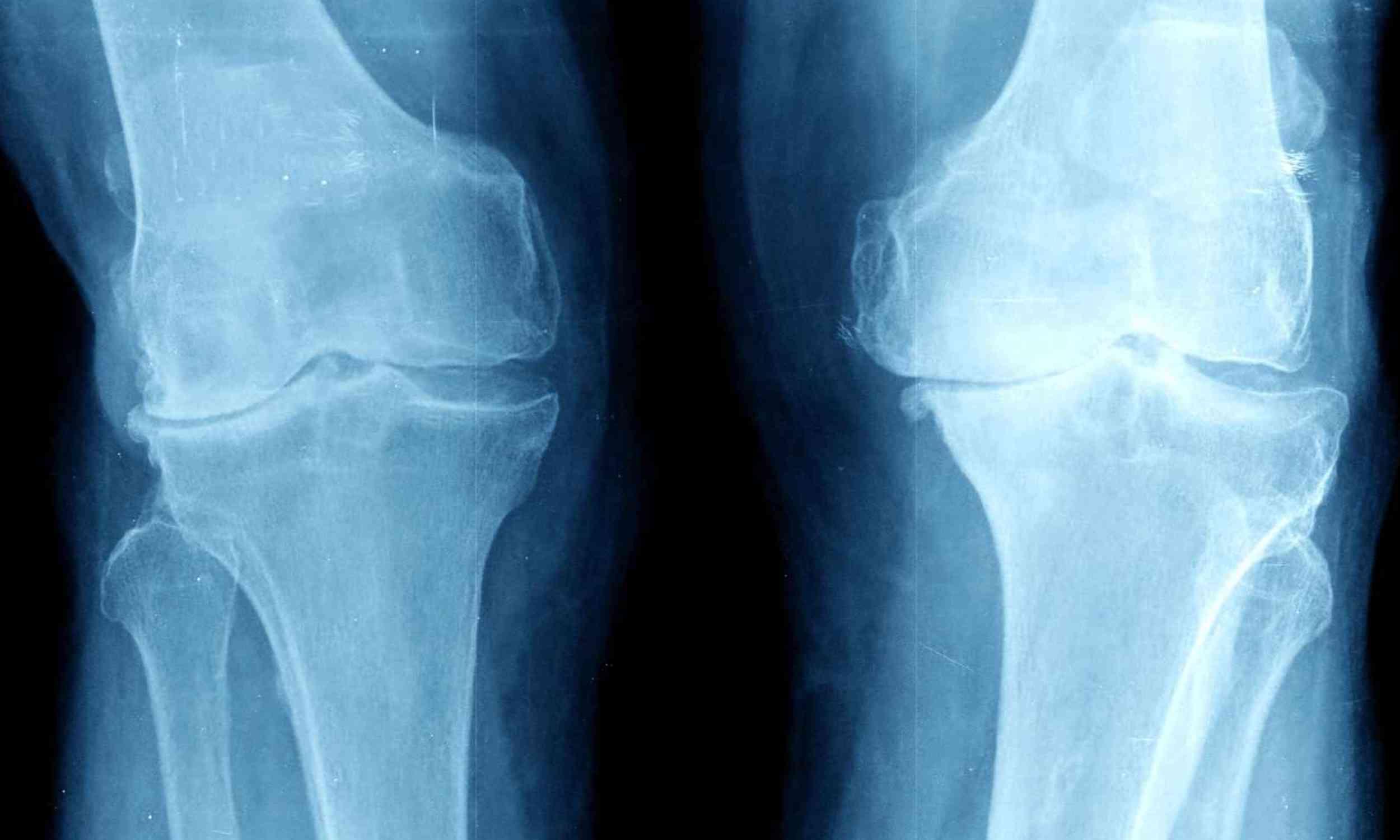
Drug trials for knee arthritis have failed repeatedly, and for years the field shared a favorite explanation. The disease must be several different conditions in disguise, each running on its own biology.
An international team built the largest study ever conducted on joint fluid to test that idea. The proteins inside the knees answered the question, but not the way anyone predicted.
Osteoarthritis (OA), the most common form of arthritis, ranks among the leading causes of disability worldwide. It affects up to a third of adults over 60, yet no treatment can slow the damage to the joint itself.
Because the disease looks so different from person to person, many researchers argued it might be several conditions in disguise, each running on its own underlying biology, or an endotype. Pinning those down would let doctors match treatments to patients.
Professor Tonia Vincent, a rheumatologist at the University of Oxford, has chased this question for years. Since 2019 she has led an international consortium built to settle it, drawing samples from 17 patient groups across Europe and North America.
Earlier studies mostly relied on blood, which only loosely reflects what is happening inside a single joint. Vincent’s team went to the source, drawing synovial fluid – the liquid that lubricates the knee – straight from the joint.
The researchers collected one fluid sample each from more than 1,300 people with established knee arthritis, plus 36 healthy volunteers. A sensitive screening tool then measured over 7,000 proteins in every sample.
Rather than testing proteins that they already suspected, the researchers sorted everyone by the protein patterns floating in the fluid. If separate diseases existed, the patients should fall into clean, distinct groups.
They did not. Plotting each person’s protein profile, the team watched the dots refuse to split into clusters.
Instead, points smeared into one continuous cloud, with patients spread along a gradient. No one had tested this at such scale in joint fluid.
Early on, two rough groups did seem to appear. But those were an artifact of proteins leaking from broken cells, and once the team corrected for that noise, the division dissolved. No real subtypes at all.
“The field has debated whether OA is really a group of separate diseases,” said Vincent.
Her data instead describe a single condition that varies by degree, not by kind.
Across that spectrum, one process dominated nearly every patient. The fluid was thick with proteins linked to breaking down and rebuilding joint tissue – suggesting a continuous repair response running in the background.
That pattern fits the disease. As cartilage wears away, the surrounding tissue likely keeps trying to patch the damage, and the proteins in the fluid appeared to capture that response in real time.
Comparing their findings against gene activity measured in actual joint tissue, the team found the same repair process active in both the cartilage and the joint lining. Both appeared to be sending proteins into the fluid.
The single spectrum changed in meaningful ways once the team sorted patients by known risk factors. Dividing people by body weight and sex revealed additional biological pathways in the joint fluid.
In people with obesity – those with a body mass index of 30 or higher – the joint fluid showed stronger signs of inflammation through the complement system, part of the body’s immune defenses. Coagulation, the blood-clotting machinery, was also elevated.
Men showed a different signal, tied to the growth of new blood vessels. In both groups, the inflammation and clotting markers tracked with C-reactive protein, a routine blood test for inflammation.
For all that protein data, one thing the fluid could not explain well was the pain. Proteins linked to reported pain in one dataset failed to hold up in another. They were not reliable enough to trust.
The strangest miss involved nerve growth factor, a protein so tied to joint pain that drugs blocking it have reached advanced clinical trials. Here it tracked with how damaged an arthritic knee looked, not with how much pain the patient reported.
Pain seems driven by far more than what floats in the joint. Sleep, mood, and the nervous system all weigh in, which makes it a slippery thing to read from a fluid sample alone.
The central question is settled in a way it never was before. Knee arthritis is not a bundle of separate diseases, but one continuous condition.
A shared biology of tissue repair runs through nearly every patient, varying with weight, sex, and inflammation.
That changes the approach to treatment. Instead of chasing elusive subtypes, drug developers can aim at the shared repair pathway, tuning it per patient.
The inflammatory routes that lit up in heavier patients already worked as targets in animal experiments.
It may also explain why so many trials have failed: they have lumped very different patients together and asked one drug to work for all.
With the dataset now open to scientists everywhere, the next round can sort patients before testing begins.
Like what you read? Subscribe to our newsletter for engaging articles, exclusive content, and the latest updates.
Check us out on EarthSnap , a free app brought to you by Eric Ralls and Earth.com.
Saturday, June 27, 2026